Chinese Spear and Sword Names Explained: Jian, Dao, and Polearms
If you’ve ever seen a Chinese weapon labeled “spear” in one English source and “halberd” in another, you’re not imagining things. A lot of Chinese weapon names get loosely translated in games, movies, and even museum captions—usually to keep things simple.
So here’s the fix: a clean map of the Chinese terms people actually use, plus the “close enough” English labels, typical eras, and what each weapon was meant to do.
Why English Translations Get Messy (Fast)
In English, “sword” is a big umbrella word. In Chinese, the characters already tell you what kind of blade it is: double-edged (劍 jiàn) vs single-edged (刀 dāo).
Same problem on the long-weapon side: a bunch of pole weapons get flattened into “spear,” even when they’re built to hook, chop, or sweep—not just thrust.
The 30-Second Map: Spear, Polearm, Jian, Dao
Quick note for multilingual versions: naming varies by language, so this column is meant as a common rendering, not a “best” one.
| Chinese term | Pinyin | What it really means | Common translation (example) |
|---|---|---|---|
| 槍 / 枪 | qiāng | General “spear” term (often with tassel) | Spear |
| 矛 | máo | “Spear” (older/very common classical term) | Spear |
| 槊 | shuò | Long spear/lance, often linked to cavalry use | Lance / heavy spear |
| 戟 | jǐ | Spear + side blade(s) for hooking/cutting | Polearm (often “halberd”) |
| 戈 | gē | Dagger-axe style pole weapon (hook/chop) | Polearm (dagger-axe) |
| 劍 / 剑 | jiàn | Straight, double-edged sword | Straight sword |
| 刀 | dāo | Single-edged blade (can be knife or saber) | Saber / single-edged sword |
Spear Names (Thrusting Weapons on a Pole)
If your goal is “spear” in the cleanest sense—long shaft, point-first thrust—start here. These are the terms you’ll see in historical writing, martial arts lineages, and pop culture.
| Weapon name | Pinyin | Typical era (rough) | Main job | Bucket |
|---|---|---|---|---|
| 槍 / 枪 | qiāng | Han → late imperial (very long-lived) | Thrusting; formation fighting; duels in martial arts | Spear |
| 紅纓槍 / 红缨枪 | hóng yīng qiāng | Late imperial (common image) | Thrusting; tassel helps distract and manage blood on the blade | Spear |
| 矛 | máo | Shang–Zhou → onward | Classic spear term; thrusting and probing | Spear |
| 槊 | shuò | Qin–Han (especially famous) → later | Longer spear; often linked to mounted use | Spear |
| 矟 | shuò | Classical/variant writing | Alternate character used for shuò | Spear |
| 铍 | pī | Warring States → Han (seen in texts/arms lists) | Leaf-shaped spearhead; thrusting with better cutting surface | Spear |
| 標槍 / 标枪 | biāo qiāng | Various periods | Throwing spear (javelin-style) | Spear |
| 投槍 / 投枪 | tóu qiāng | Various periods | Thrown spear; skirmishing | Spear |
| 雙頭槍 / 双头枪 | shuāng tóu qiāng | Late imperial / opera & martial arts | Two-point spear for rapid changes of line | Spear |
| 鉤鐮槍 / 钩镰枪 | gōu lián qiāng | Qing (also modern martial arts) | Thrust + hook + cut; nasty against weapons and limbs | Spear (hybrid) |
| 狼筅 | láng xiǎn | Ming (famous in anti-pirate infantry tactics) | Anti-charge “brush spear”; disrupts blades and formations | Spear-side (formation pole) |
| 蛇矛 | shé máo | Literature + some historical mentions | Wavy spearhead; thrusting with extra tearing resistance | Spear |
| 丈八蛇矛 | zhàng bā shé máo | Famous via Romance of the Three Kingdoms & opera | Very long spear; iconic “hero weapon” for Zhang Fei | Spear |
Polearms People Keep Calling “Spears” (But They’re Not Just Spears)
Here’s where most mistranslations happen. These are pole weapons, but they’re built to do more than stab—hooking, chopping, sweeping, and pulling riders off horses.
| Weapon name | Pinyin | Typical era (rough) | Main job | Bucket |
|---|---|---|---|---|
| 戟 | jǐ | Shang–Han (battlefield peak); later mostly ceremonial | Thrust + hook/cut using the side blade | Polearm |
| 戈 | gē | Bronze Age → early imperial (classic ancient arm) | Hooking and chopping from a pole (not “just a spear”) | Polearm |
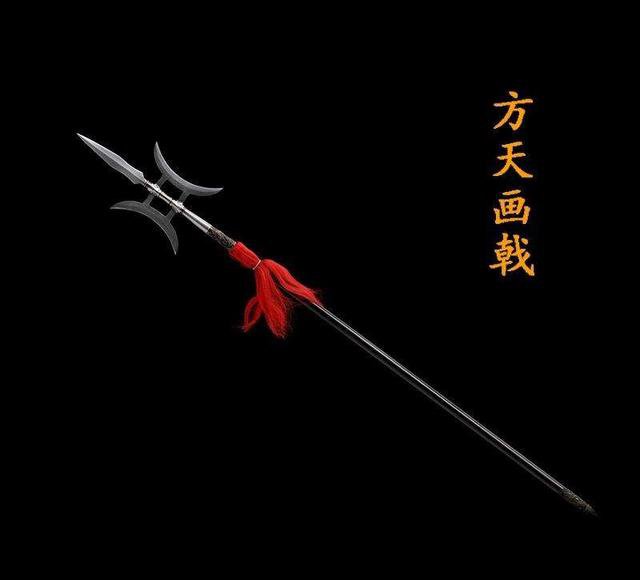
| 方天戟 / 方天畫戟 | fāng tiān jǐ / fāng tiān huà jǐ | Mostly post-Song in fiction; often ceremonial historically | Showpiece polearm; spear tip with crescent side blades | Polearm |
| 偃月刀 | yǎn yuè dāo | Song → later (often linked to training/strength) | Heavy crescent-blade pole weapon; sweeping cuts | Polearm |
| 關刀 / 关刀 | guān dāo | Popular label in opera/martial culture | Common nickname for yǎn yuè dāo forms | Polearm |
| 青龍偃月刀 / 青龙偃月刀 | qīng lóng yǎn yuè dāo | Song term; Guan Yu link is literary/popular tradition | Iconic “Guan Yu weapon” in novels and temples | Polearm |
| 三尖兩刃刀 / 三尖两刃刀 | sān jiān liǎng rèn dāo | Opera & later martial arts lists | Three-pronged pole blade; thrust + catch + cut | Polearm |
| 叉 | chā | Late imperial lists; also practical farm-tool crossover | Fork/trident-style control weapon | Polearm |
| 鈎 / 钩 | gōu | Late imperial lists | Hooking weapon; used to control limbs/weapons | Polearm-side (control) |
| 钂 / 镋 | tǎng | Traditional arms lists (varies by source) | Long pole weapon; often described like a spear with side elements | Polearm |
| 鉞 / 钺 | yuè | Shang–Zhou (often ceremonial later) | Axe-like pole weapon; power strikes | Polearm |
| 斧 | fǔ | All periods | Axe; chopping; armor-breaking | Neither (axe) |
| 棍 | gùn | All periods (training + combat) | Staff; striking, blocking, controlling distance | Neither (staff) |
| 殳 | shū | Classical term; later arms lists | Staff/pole weapon category in older naming | Neither (staff) |
| 耙 | pá | Late lists; farm-tool crossover | Rake-like pole weapon; pulling and control | Polearm |
| 鏟 / 铲 | chǎn | Late lists; temple/martial culture | Spade-like pole weapon (think “monk spade” family) | Polearm |
Nine Long / Nine Short (九長九短 jiǔ cháng jiǔ duǎn) — One Popular Version
Different books list these differently, so treat this as “a common snapshot,” not a universal law. Still, it’s a handy memory hook.
- Nine long (九長 jiǔ cháng): 槍 (qiāng), 戟 (jǐ), 棍 (gùn), 鉞 (yuè), 叉 (chā), 镋/钂 (tǎng), 鈎/钩 (gōu), 槊 (shuò), 鏟/铲 (chǎn)
- Nine short (九短 jiǔ duǎn): 刀 (dāo), 劍/剑 (jiàn), 拐 (guǎi), 斧 (fǔ), 鞭 (biān), 鐧/锏 (jiǎn), 錘/锤 (chuí), 杵 (chǔ), 棒 (bàng)
Swords in Chinese: Jian (劍) vs Dao (刀)
Here’s the biggest translation faceplant: calling every 刀 (dāo) a “sword” without explaining it’s single-edged. If you want to sound like you know what you’re doing, call it a saber (or “single-edged sword”) and move on.
劍 (jiàn) is the straight, double-edged “classic sword.” 刀 (dāo) is the single-edged family that dominates military sidearms later on.
| Weapon name | Pinyin | Typical era (rough) | Main job | Bucket |
|---|---|---|---|---|
| 劍 / 剑 | jiàn | Spring & Autumn → onward | Thrust + cut; status weapon; later also civilian/self-defense | Straight sword |
| 短劍 / 短剑 | duǎn jiàn | Ancient → onward | Close fighting; easier carry | Straight sword |
| 斬馬劍 / 斩马剑 | zhǎn mǎ jiàn | Han–Tang naming family (varies by source) | Anti-cavalry heavy blade concept | Straight sword-side (heavy) |
| 刀 | dāo | Bronze Age → onward (as a family) | Single-edged cutting; becomes dominant battlefield sidearm later | Saber |
| 環首刀 / 环首刀 | huán shǒu dāo | Han → Six Dynasties (iconic) | Military sidearm; sturdy chopping | Saber |
| 橫刀 / 横刀 | héng dāo | Sui–Tang (famous) | Standard belt saber; straight-ish profile | Saber |
| 長刀 / 长刀 | cháng dāo | Tang (famous) | Two-handed long saber for infantry impact | Saber (two-handed) |
| 陌刀 | mò dāo | Tang (often discussed as heavy long saber) | Heavy cutting; formation shock weapon | Saber (two-handed) |
| 斬馬刀 / 斩马刀 | zhǎn mǎ dāo | Song (commonly cited) | Anti-cavalry long blade concept | Saber (long) |
| 雁毛刀 | yàn máo dāo | Ming–Qing family | Light curve; good at thrust + cut balance | Saber |
| 雁翎刀 | yàn líng dāo | Ming–Qing (very common label) | Moderate curve; versatile battlefield cutter | Saber |
| 柳葉刀 / 柳叶刀 | liǔ yè dāo | Ming → Qing (standard sidearm vibe) | “Workhorse” saber; cavalry + infantry sidearm | Saber |
| 片刀 | piàn dāo | Late Ming (noted as rarer) | Curved cutting blade; influenced by saber forms | Saber |
| 牛尾刀 | niú wěi dāo | Late Qing (19th c. association) | Mostly civilian/martial arts use; big, showy cutter | Saber |
| 繡春刀 / 绣春刀 | xiù chūn dāo | Ming (popular culture + historical association) | Sidearm style associated with imperial agents in stories | Saber |
| 苗刀 | miáo dāo | Late imperial → modern naming | Long two-handed saber; modern practice and reconstruction | Saber (two-handed) |
Famous Named Weapons: What’s “History” vs “Storytelling”
This part matters because English lists often mix museum objects and novel weapons like they’re the same thing. They’re not—and that’s okay, as long as you label them honestly.
Real-world artifacts people can actually point to
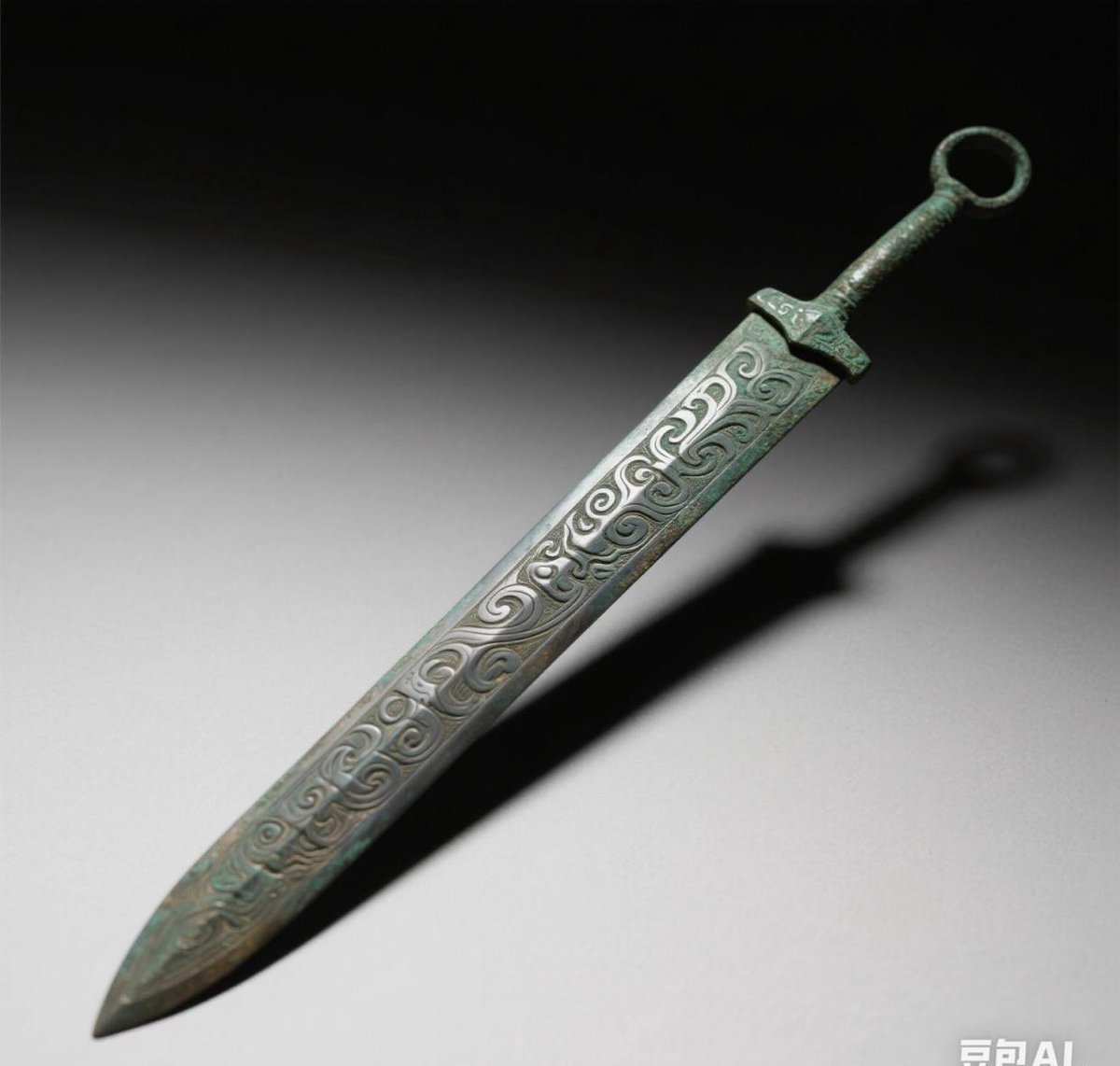
- 越王勾践剑 (yuè wáng gōu jiàn jiàn) — Spring & Autumn bronze jiàn; one of the best-known surviving early Chinese swords. Bucket: straight sword (jiàn).
- 吴王夫差矛 (wú wáng fū chāi máo) — Spring & Autumn bronze máo; a famous excavated spearhead with inscriptions. Bucket: spear (máo).
Legend, literature, and the “everyone knows it” weapons
- 干将 (gān jiāng) & 莫邪 (mò yé) — legendary paired swords from Spring & Autumn-era storytelling. Bucket: straight sword (jiàn).
- 纯钧 (chún jūn) — a famous “named sword” in classical tradition. Bucket: straight sword (jiàn).
- 丈八蛇矛 (zhàng bā shé máo) — the iconic “serpent spear” linked to Zhang Fei in Romance of the Three Kingdoms. Bucket: spear (máo).
- 方天画戟 (fāng tiān huà jǐ) — the Lü Bu weapon everyone recognizes; shows up heavily in post-Song fiction and opera. Bucket: polearm (jǐ family).
- 青龙偃月刀 (qīng lóng yǎn yuè dāo) — “Guan Yu’s weapon” in popular culture; historically the term ties to yǎn yuè dāo families rather than a verified Three Kingdoms battlefield item. Bucket: polearm.
- 龙胆亮银枪 (lóng dǎn liàng yín qiāng) — Zhao Yun’s signature spear name in later tradition and pop culture. Bucket: spear (qiāng).
My 3-Step Method to Translate These Without Regret
- Read the core character first: 槍 (qiāng), 矛 (máo), 槊 (shuò) usually means “spear-side”; 劍 (jiàn) and 刀 (dāo) are “sword-side.”
- If it has side blades or hooks, stop calling it a spear: 戟 (jǐ), 戈 (gē), 偃月刀 (yǎn yuè dāo) are polearms—say “polearm” or the closest known form (“halberd,” “dagger-axe”).
- When you must simplify, be honest in one phrase: “Dao (刀 dāo), a single-edged saber” or “Ji (戟 jǐ), a Chinese polearm often called a halberd.” That one line prevents 90% of confusion.
Boundary Notes (This Is the Part That Builds Trust)
These are traditional Chinese weapon names, not a complete list of every regional pattern, workshop variant, or battlefield modification. Some names come from historical records and excavated artifacts, others come from classical literature, opera, and later martial arts catalogues.
If you’re naming weapons for a game, novel, or catalog, the safest move is to label the bucket clearly (spear / polearm / straight sword / saber) and then use the Chinese name with pinyin for flavor and accuracy.